Parkinson’s diagnosis ‘hangs like a cloud’
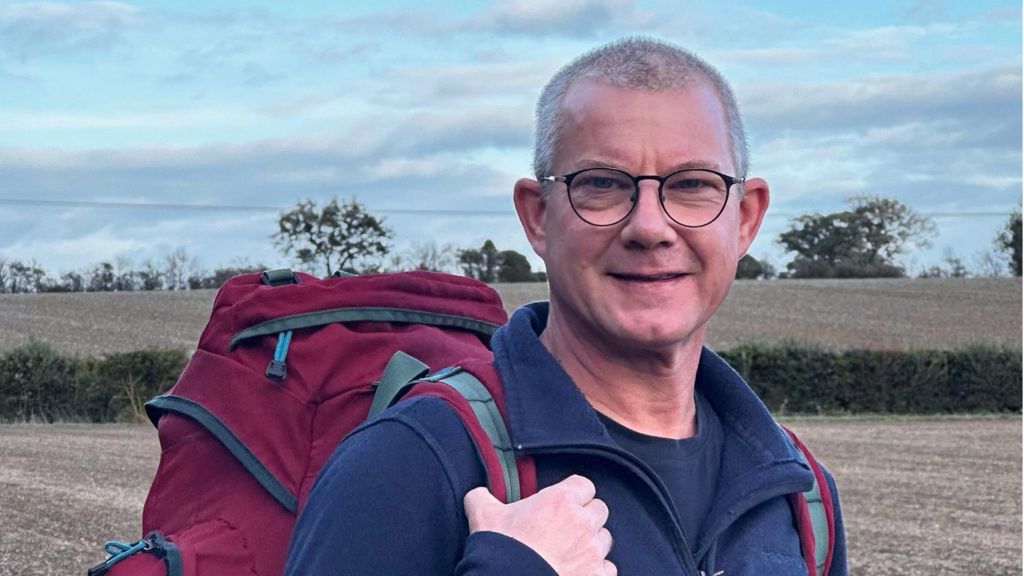
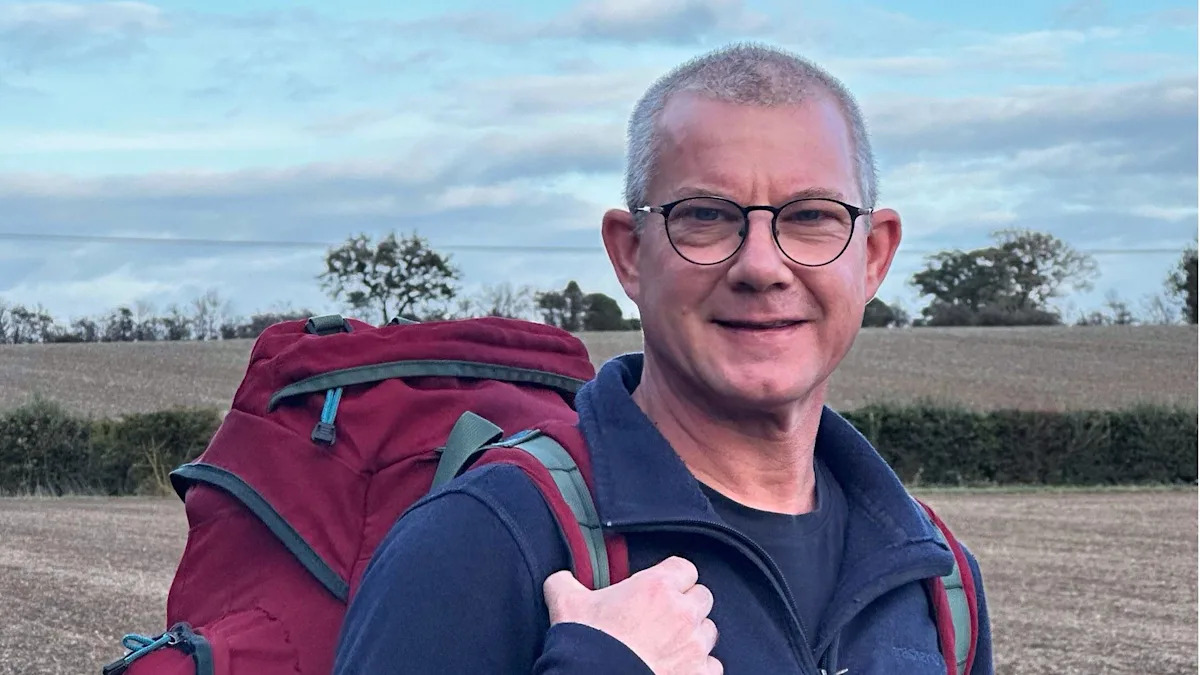
Sam Sharp was once a keen runner and walker who had conquered testing terrains and scaled mountains across the world.
But, in February 2024, the Suffolk primary school teacher was diagnosed with Parkinson’s disease after almost two years of medical tests and investigations.
The 52-year-old, from Boxford, first started noticing his health taking a turn when he encountered problems using his left hand during two-handed tasks, like typing.
“It’s a devastating thing to be told and a huge shock, and I think initially you don’t take it in – it’s like dropping a bomb on your life,” he said.
“You then get the fallout from that, which has taken me all of the last year and a half really to fully process and learn to deal with.
“It hangs like a cloud over you.”
In the UK more than 160,000 people currently live with the condition, which, over time, can cause involuntary shaking of particular parts of the body, slow movement, and stiff and inflexible muscles.
According to the charity Parkinson’s UK, someone is diagnosed with the condition every 20 minutes and, by 2050, the number of patients worldwide is set to double to 25 million.
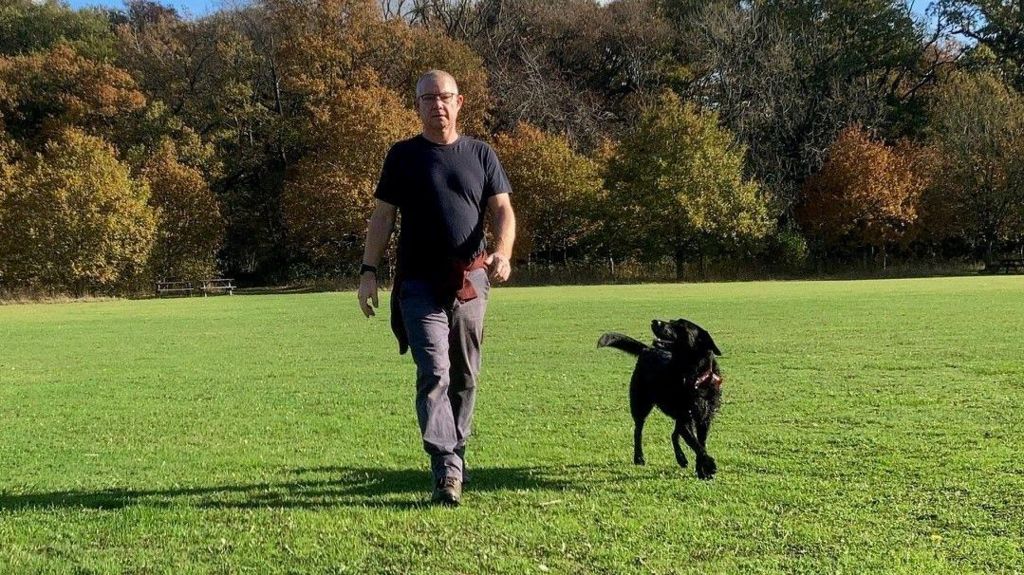
Since Mr Sharp’s diagnosis, the once-keen runner has had to swap his passion for pounding the pavements for slower strolls after the effects of the condition progressed to his left leg.
He says he is currently managing his symptoms “very well” with medication which, according to the NHS, “can be used to improve tremors and movement problems”.
Not all the medications available, however, are as useful for everyone, and the short and long-term effects of each can vary between patients.
‘Loss of control’
Mr Sharp says that changes in his condition and symptoms have “progressed slowly”, but he acknowledges that the worst is yet to come.
“You know that your future is not going to be what you expected it to be, but you don’t know what kind of shape that’s going to take,” he said.
“The overriding feeling is that you’ve lost control of your future – in your early 50s you sort of have a rough idea of how your future is going to look as you get a bit older.
“But this has pulled the rug from under me and I’m no longer sure what’s going to happen and what my life will look like, and that uncertainty is very hard to cope with.”
Mr Sharp has been teaching in the county for 10 years.
And, despite his diagnosis, he remains determined to continue his career – in fact, he believes it to be key to helping keep the condition at bay for long as possible.
“I’m still more than capable of carrying on with my teaching role, still enjoying it, still getting a lot out of it,” he added.
“My energy levels are slightly harder to maintain, but I feel like I’ve got more years of teaching left in me.
“It’s good to keep active and keep challenged and that’s part of learning to cope with this kind of a situation.”
‘No two journeys are the same’
While Parkinson’s is a relatively well-known condition, the way it affects every patient is different.
According to Parkinson’s UK, symptoms, the order in which they appear, and how they progress “will be personal” to each individual.
“No two journeys with Parkinson’s are the same,” the charity says, and while symptoms may be noticeable one day, they may not prove a problem at all the next.
“The thing about Parkinson’s that makes it difficult from a doctor’s perspective and a patient’s is that it’s very variable,” said Mr Sharp.
“It’s very difficult to predict different patients’ experiences and how it progresses will be different – it goes at different paces and affects different parts of the body.
“That’s one of the hardest things to deal with, not knowing what might happen and how quickly it might happen.”
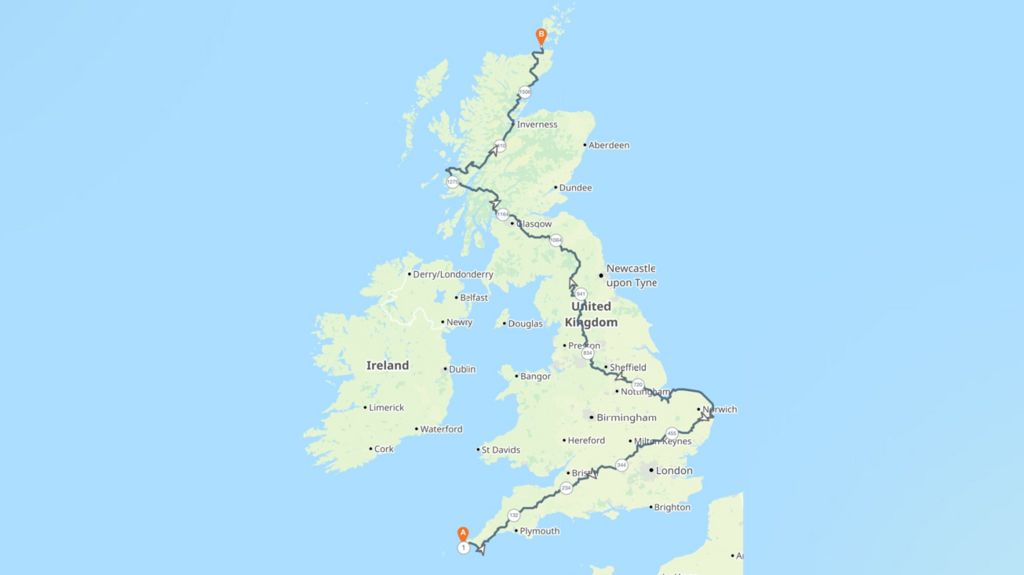
Determined not to allow the condition to hold him back, Mr Sharp is now preparing to embark on what he describes as an “epic in scale” 1,600-mile (2,574 km) walking challenge.
The trek will take him to the four corners of mainland Britain and see him carry everything he needs on his back – with campaign planned at various points along the route.
Mr Sharp is carrying out the challenge in aid of Parkinson’s charities with the hope of raising £100,000.
“I’ve set a figure based on what I’ve seen other people have managed to raise in the past, so that would be my goal, yeah,” he said.
“When the rug has been pulled from under you, you need some stability and charities provide that.
“And the search for a cure is a really vital thing for funding to go towards, so that’s what I’d be trying to contribute to.”
‘No one is alone’
According to David Newbold, director of community at Parkinson’s UK, just two-and-a-half hours of physical activity a week can help manage the symptoms of the disease.
“Parkinson’s can affect anyone, young or old, and everyone’s experience with the condition is different,” he added.
“It’s inspiring to see how Sam is approaching his Parkinson’s diagnosis with such positivity, making plans to show the world that you can live well with the condition and motivate others to do the same.
“Sam will no doubt raise funds and awareness with his challenge, and show how no one is alone with the condition.”
Follow Suffolk news on BBC Sounds, Facebook, Instagram and X.