In a scientific first, researchers have turned plastic waste into a mainstay treatment for Parkinson’s disease (PD).
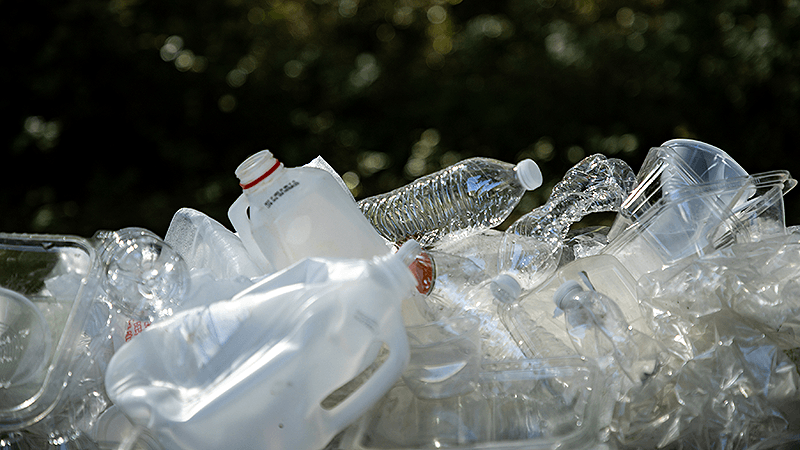
In a proof-of-concept study, researchers used engineered bacteria to convert polyethylene terephthalate (PET) — a widely used plastic found in bottles and food packaging — into levodopa (L-DOPA).
Investigators engineered Escherichia coli bacteria to convert a chemical building block of PET into L-DOPA through a series of biological reactions, with an 84% conversion and a yield of 5.0 g/L — equivalent to several early-stage clinical doses of the drug.

Although still in the early stages, the process could hold promise for drug development and reframes plastic pollution as a potential pharmaceutical feedstock, said study investigator Stephen Wallace, PhD, professor of chemical biotechnology at the University of Edinburgh in Edinburgh, Scotland.
“There’s something about the L-DOPA drug that looks very similar to the structure of plastic waste,” he told Medscape Medical News. “It bears a sort of chemical similarity to the pharmaceutical — enough that it really made us think that this could be possible.”
The study was published online on March 16 in Nature Sustainability.
A Better Way to Make L-DOPA?
L-DOPA is currently produced at a global scale of approximately 250 tons per year, primarily through chemical or chemoenzymatic synthesis methods that depend on petrochemical feedstocks.
The extraction and processing of these finite resources are energy-intensive and carbon-heavy, with the pharmaceutical industry as a whole generating a carbon footprint estimated to be 55% larger than the automotive sector as of 2019.
Demand for the drug is projected to rise as PD prevalence increases with an aging population, with one study estimating that the number of people living with the disease worldwide will more than double by 2050, reaching 25.2 million.
An estimated 56 million tons of PET is produced each year worldwide, almost all of which ends up as waste after a single use.
“Plastic waste is often seen as an environmental problem, but it also represents a vast, untapped source of carbon,” Wallace said in a statement. “By engineering biology to transform plastic into an essential medicine, we show how waste materials can be reimagined as valuable resources that support human health.”
The approach developed uses synthetic biology to insert copies of natural genes from several other microorganisms into E coli, giving it a metabolic pathway it does not naturally possess. Genes from Comamonas sp. convert terephthalic acid — the building block released when PET plastic breaks down — into a chemical intermediate; genes from Klebsiella pneumoniae simplify that intermediate into a molecule called catechol; and a gene from Fusobacterium nucleatum performs the final step, combining catechol with other compounds to form L-DOPA.
All these genes are housed within the engineered E coli, which does all the work. The process takes about 27 hours.
Wallace compared the process to beer brewing, except “the bacteria no longer takes sugar and makes alcohol — it takes deconstructed plastic bottles and turns them into L-DOPA for Parkinson’s disease.”
The same research group previously used engineered E coli to convert PET into acetaminophen. The new work extends this platform to a neurologic therapeutic for the first time.
From Plastic Bottles to Drug Target
The researchers tested three PET waste sources: a postconsumer plastic bottle found discarded in Edinburgh, industrial hot stamping foils from a manufacturing partner, and enzymatically depolymerized PET packaging film. All three yielded L-DOPA, though the postconsumer bottle produced lower conversions, attributed to residual plasticizers in lower-grade consumer plastic.
Significant work remains before the process could contribute to pharmaceutical supply chains.
“I think the main hurdle that we face right now is scalability,” Wallace said. “Taking the process from where it is now in a small tube in a research laboratory to a full-scale bioreactor where we’re actually making productive quantities of this is not an easy task.”
However, he noted that similar bioreactor scale-up has been achieved for less productive fermentation technologies and that his team has secured funding and is working with pharmaceutical industry partners to advance the process.
Additional work will be needed to confirm the absence of plasticizers and other contaminants in the final product, integrate the biosynthetic genes into the bacterial genome to eliminate antibiotic-dependent plasmid maintenance, and conduct life cycle and technoeconomic assessments.
Wallace emphasized that the resulting medication would not contain microplastics. “We actually deconstruct the plastic material before we feed it to the bacteria. So there’s no plastic in that process,” he said. “And the drug that would be made from this would have to undergo the sort of analytical and regulatory procedures that any other pharmaceutical would have to.”
He also stressed the early-stage nature of the work. “It’s important to emphasize this is quite an early-stage discovery, and this isn’t a manufacturing process that we’re reporting at all,” he said.
The study was funded by UK Research and Innovation and the Industrial Biotechnology Innovation Centre. Wallace reported having no relevant financial relationships.
Get the source article here