Artificial intelligence is inventing new drugs against Parkinson’s disease, antibiotic-resistant superbugs and many rare diseases – progress that many scientists never dreamed possible.
For around half a century, humanity has been slowly losing its battle against bacteria. The most powerful weapons we have in this fight, antibiotics, are increasingly ineffective as drug resistance spreads. Around 1.1 million people now die every year from infections that were until recently easily treated. And the death toll is expected to rise to more than eight million by 2050 unless urgent action is taken.
Developing new antibiotics is a frustratingly slow and expensive process. Between 2017 and 2022, just 12 new antibiotics were approved for use, the majority of which were similar to existing drug-types that bacteria are already developing resistance to. The field has been chronically neglected due to a lack of interest from drug companies and underfunding.
But now researchers are looking to close the gap – and some are betting on artificial intelligence to help them do it.
“We can – in a matter of days or hours – look at massive libraries” of chemical compounds to identify those that display antibacterial activity, says James Collins, professor of medical engineering and science, at Massachusetts Institute of Technology in Cambridge, US. With the help of AI, Collins and his team have already discovered two new compounds that could prove vital weapons against the highly drug-resistant infections gonorrhoea and MRSA.
It is just one example of how AI is opening up a new era of drug discovery – promising progress on some of the most intractable medical problems of our time. Scientists are now pointing AI at conditions with no known cure such as Parkinson’s Disease, and thousands of rare diseases, in the hope of new breakthroughs.
Collins and his team trained a generative AI model to recognise the chemical structures of known antibiotics. This allowed the algorithm to learn what it takes to kill bacteria. The researchers then used the AI to screen more than 45 million different chemical structures for their ability to target Neisseria gonorrhoeae, the bacteria that cause gonorrhoea, and Staphylococcus aureus, a significant source of infections in the form of MRSA.
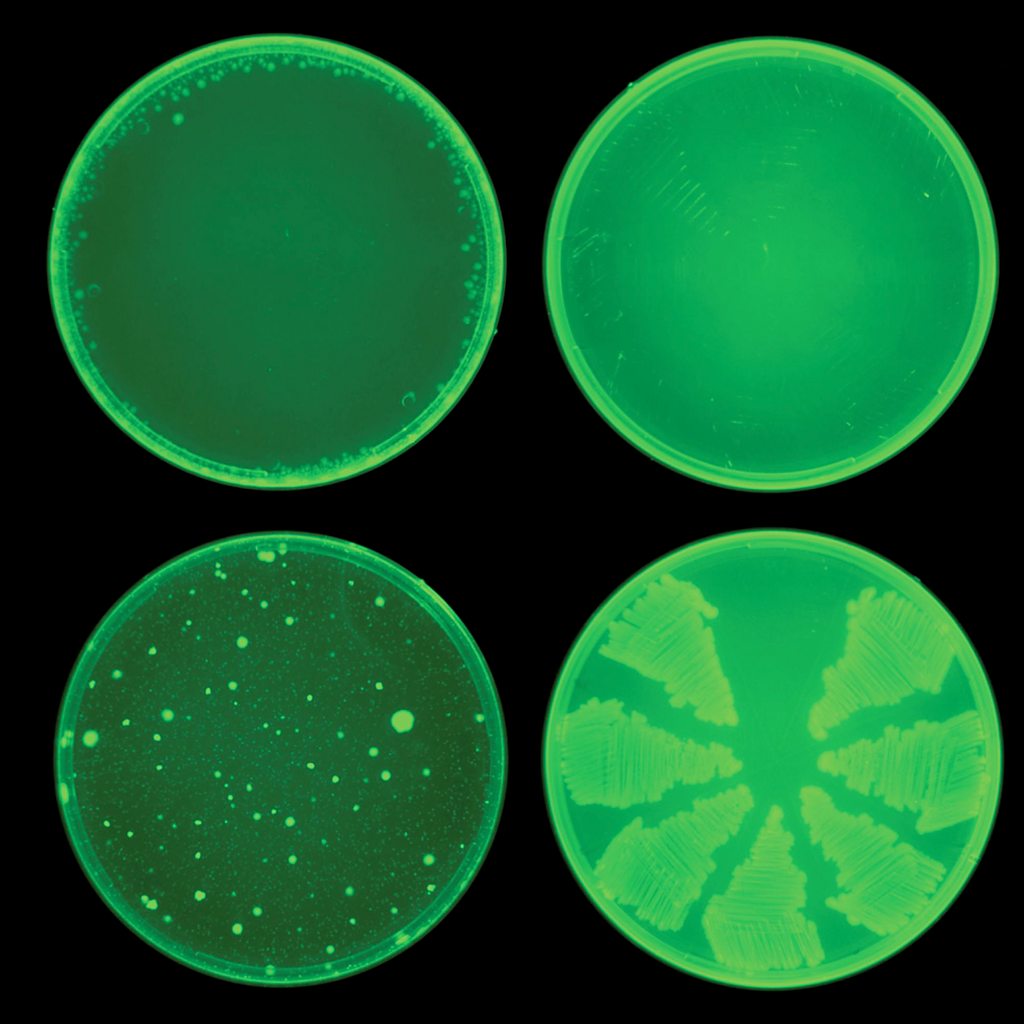
Both of these bacteria are highly drug-resistant – in the case of gonorrhoea, it’s able to evade almost every medicine used to treat it. There are now a dwindling number of antibiotics available – drugs of last resort – to wield against each.
Collins’ method used AI to create entirely new compounds to target the bugs. In one approach, he selected a molecule as a starting point and used a combination of generative AI techniques to build it out, “adding bonds, atoms, substructures”, he says. At each critical stage, the compound was scored by his trained AI model: “Is this looking like an antibiotic? Is it getting closer to a potential antibiotic?” Another approach involved dispensing with the starting compound and letting the AI freestyle from the beginning.
Collins and his colleagues designed 36 million compounds in this way with potential to work against the bacteria. The team selected 24 to synthesise in a laboratory. Seven proved to have some antimicrobial activity, and two were highly effective at killing strains of both bacteria that were resistant to other types of antibiotics.
Importantly, the compounds appear to target the bacteria in different ways to already existing antibiotics, raising hopes they could form a new class of medicines able to overcome the defences of drug-resistant bacteria. The two candidates are currently undergoing further testing.
Collins and his laboratory have previously used AI to discover other powerful new antibiotic compounds that kill a wide range of bacteria that are resistant to treatment, including Clostridium difficile, a common bowel infection, and Mycobacterium tuberculosis, which causes tuberculosis.
For some diseases, however, researchers don’t have the luxury of drawing upon existing drugs to help them find new treatments. Instead, they need to start with what is known about the disease itself. In some cases, however, even that gives them little to go on.
Progress on Parkinson’s
Parkinson’s Disease was first identified in 1817, but more than two centuries later, there is still no treatment that slows the progression of the illness. There are more than 10 million Parkinson’s patients worldwide, and rates are rising in countries with ageing populations. About one in 37 people in the UK will be diagnosed at some point in their lives. In the US, up to one million people currently live with the disease.
The long-running efforts to treat Parkinson’s are littered with failure. Part of the problem is we still don’t know what causes the disease.
“There are endless debates about the origin of the disorder,” says Michele Vendruscolo, professor in biophysics and co-director of the Centre for Misfolding Diseases at the University of Cambridge in the UK. “If you go to a Parkinson’s conference, you will hear dozens of different hypotheses that are all actively investigated.”
That makes targeting a drug to prevent the disease incredibly difficult.
There have been a huge number of clinical trials investigating different hypotheses, but to date, they’ve been unsuccessful, says Vendruscolo. “People are really confused about what the target should be,” he says. “Even if you know the target, it’s typically very difficult to go after it.”
But in 2024, Vendruscolo and his colleagues published a study where they used machine learning – a form of artificial intelligence – to search for potential drug candidates able to target the clumps of misfolded proteins in the brain that occur in Parkinson’s patients. The aggregations of proteins, known as Lewy bodies, are thought to play a role in the initial stages of neurodegeneration in Parkinson’s patients, eventually leading to symptoms including tremors, slowness of movement and muscle stiffness.
Right now, the most effective treatment for Parkinson’s is Ledovopa, a drug that helps to improve the symptoms of the disease but can also cause side-effects such as involuntary movements.
Vendruscolo is focused on halting the progression of the disease itself. He and his team started with a set of compounds that had already been identified as potentially effective in the treatment of Lewy bodies. He fed these into a machine learning program, which extrapolated from their chemical structures to propose new compounds that might also be effective.
To treat neurodegenerative diseases like Parkinson’s, drugs need to be small enough that they can pass through the blood-brain barrier. But even if scientists restrict their drug hunt to small molecules, “you still have a humongous amount of choice”, says Vendruscolo. “The number of possible small molecules is far larger than the number of atoms in the Universe.”
The power of AI is that it can very quickly narrow down that search.
“We can analyse this data and make very accurate predictions about the way candidate molecules will bind to the target at a scale that was unthinkable until a few years ago,” says Vendruscolo. With more traditional methods, scientists could screen around one million molecules in six months at the cost of several million pounds. “Now, you can do the same in a few days but screen billions of molecules, for the cost of a few thousand pounds.”
Vendruscolo’s AI-suggested compounds were then tested in the lab. “We measured which of the candidates were actually binding [to the Lewy bodies], and we fed this information back into the machine learning program, so it could learn from its own mistakes,” he says.
They ended up identifying five promising new compounds more quickly and effectively than conventional approaches. The compounds identified by the AI were also far more novel than would have been found using more traditional drug development methods, says Vendruscolo. They are now undergoing further testing to assess whether they could one day be offered as a therapeutic to Parkinson’s patients.
Vendruscolo hopes that one day, AI could help to halt Parkinson’s before it begins. He is now using the technology to find small molecules that bind to the individual proteins that form Lewy bodies while still in their normal state.
“If we can stabilise the proteins in this form by binding to them, we have prevented Parkinson’s – which is better than curing it.”
New uses for old drugs
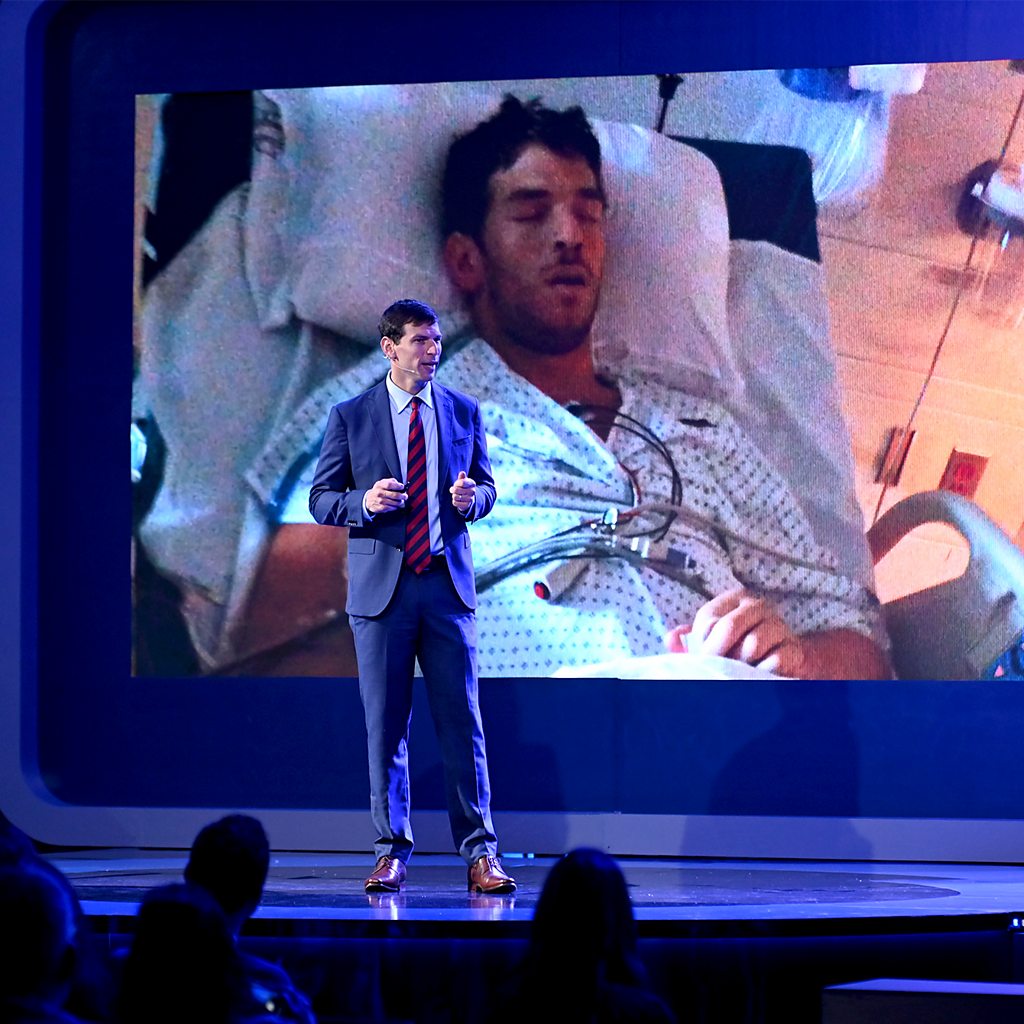
Treating diseases doesn’t always mean new drugs. David Fajgenbaum, an associate professor of medicine at the University of Pennsylvania in the US, managed to save his own life with an existing drug that doctors would never have prescribed him. At the age of 25, while still at medical school, Fajgenbaum was diagnosed with a rare subtype of a disorder called Castleman disease, which triggered an immune system reaction where his liver, kidneys and bone marrow malfunctioned. He didn’t respond to any of the available treatments and doctors told him they were at a loss.
After weeks of running tests on his own blood, combing the medical literature and treating himself as a human guinea pig, he eventually struck upon a potential salve: an unassuming drug called sirolimus. It is typically administered to kidney donation recipients to prevent rejection of their new organ. Baffling his doctors, he used the drug to beat his Castleman disease into retreat. It has now been in remission for more than a decade.
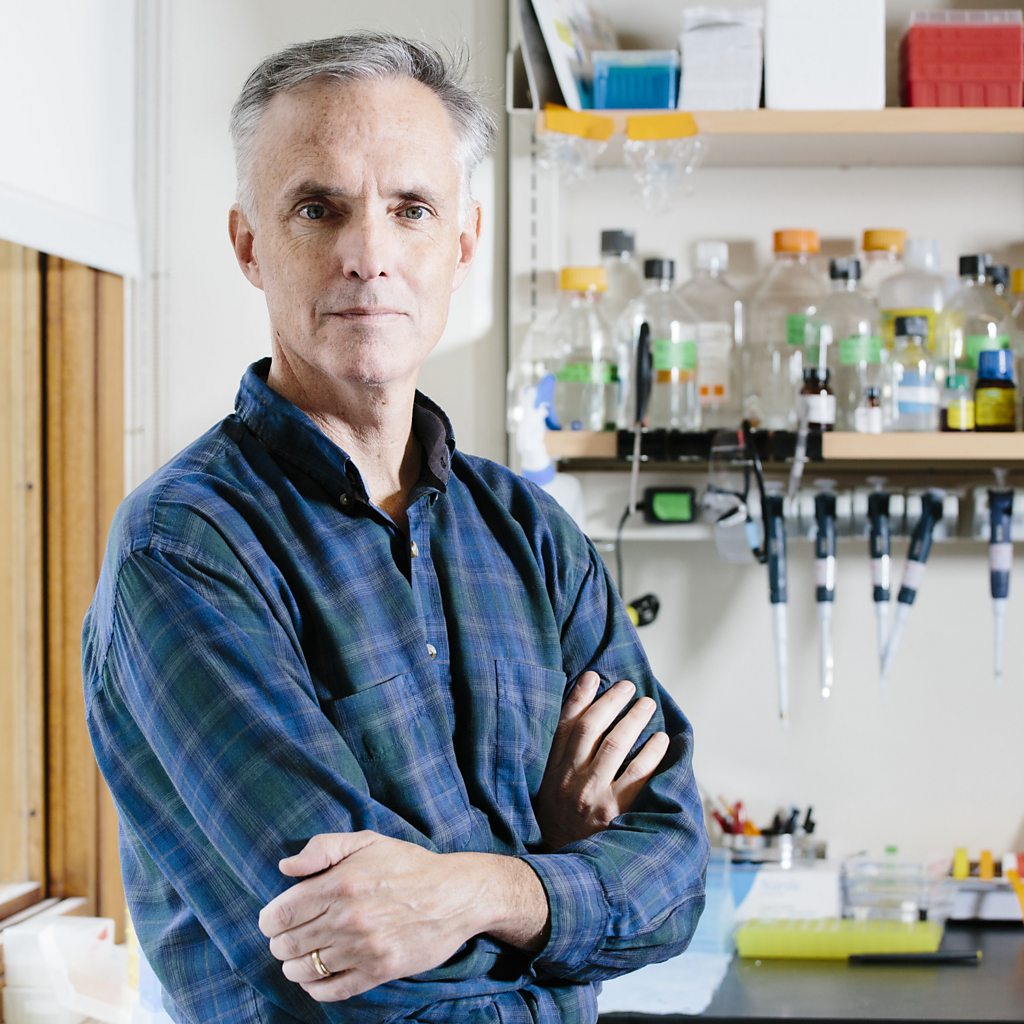
His experience opened his eyes to the potential that exists in the many thousands of drugs that have already been through the extensive safety testing required to make it to market. By repurposing these drugs to treat other conditions, patients get treatments they would not have otherwise.
In 2022, Fajgenbaum set up a nonprofit called Every Cure, using machine learning to compare thousands of drugs against thousands of diseases. The most promising are tested in laboratories or sent to doctors who are willing to experiment.
But while Faigenbaum is the most prominent scientist to have leveraged AI in this way, others are already making breakthroughs. At Harvard Medical School, an AI model found nearly 8,000 approved drugs that could potentially be repurposed to treat 17,000 different diseases.
And AI is proving particularly useful in finding treatments for rare diseases that are often overlooked by pharmaceutical companies, due to the lack of financial incentive afforded by so few potential patients.
Repurposing existing drugs offers another opportunity. In recent years AI has identified potential for repurposing existing treatments for conditions including the rare chromosomal disorder Pitt–Hopkins syndrome, the rare inflammatory disease sarcoidosis and a rare kidney cancer that affects young children, Wilms tumour.
Researchers at McGill University in Montreal, Quebec, Canada, recently used AI to repurpose drugs for Idiopathic Pulmonary Fibrosis (IPF), a rare, progressive lung disease characterised by the scarring and thickening of lung tissue. Their approach involved modelling the progression of the disease with an AI model.
“Most complex diseases are driven by abnormal cell state change,” says one of the researchers, Jun Ding, assistant professor in the department of medicine at McGill University. “If we can figure out how the cell went from healthy to abnormal, maybe we can reverse it, or slow it down.”
First, the researchers extracted lung cells from healthy participants and patients at different stages of the disease progression, using high resolution DNA sequencing to generate a lot of data. This allowed them to see how the cells changed over the course of the illness. They then built a generative AI model that would simulate this, mapping the transitions of various cell states and populations as the disease advanced. Along the way it would also highlight any biomarkers that could be used to diagnose the disease and potential therapeutic targets.
More like this:
• Peptides to Botox: New hope for migraine patients
• The magic of the world’s rarest blood
• How food messes with the medicines we take
“We call it the virtual disease system,” says Ding. Traditionally, drugs have been tested on animals or on isolated human cells. They wanted to apply the same paradigm with AI – essentially simulating the effects of IPF on virtual cells. “Researchers can then test the impacts of applying different drugs in the model without too much cost,” says Ding.
In the McGill study, the AI suggested eight candidate treatment options for IPF. One promising candidate is a drug that is typically prescribed for hypertension, offering a low-cost option that is already proven as safe.
Ding says that the AI he and his colleagues developed could also be used on other diseases including cancers and lung conditions. His team is continuing to improve the model and diversify it across different conditions.
IPF saw another recent breakthrough thanks to AI. Insilico Medicine, an AI drug-discovery company, has produced a drug candidate called Rentosertib. In phase two clinical trials, it has shown promise against IPF. The company used AI to both identify a potential weakness in the disease and design a drug that could target it. It hopes that if the trials are successful, the drug could be available by the end of the decade.
And Insilico Medicine is not alone. Other companies like Terray, Isomorphic Labs, Recursion Pharmaceuticals and Schrödinger are also pursuing medical advances with AI.
“My belief is, in the next five to 10 years, the majority of new drug development could be guided by AI, or even entirely based on AI,” says Ding.
A limited revolution
But despite the advances powered by AI, there are limitations. Many of the datasets on drugs are held by biotech and pharmaceutical companies, meaning they are not publicly available. “You have to get the data about drug properties like absorption, distribution, excretion, toxicity,” says Collins. “We don’t have those datasets.”
At present, AI is most useful in the initial screening part of the drug development process: in target identification and finding molecules to bind to the target. These are just two steps in the long process it takes to develop new medicines, meaning it could be some time before any of these potential treatments find their way to patients, if at all.
“AI is revolutionising drug discovery, says Vendruscolo. “But only in very specific ways.”
—
For trusted insights on health and wellbeing, sign up to the Health Fix newsletter by senior health correspondent Melissa Hogenboom who also writes the Live Well For Longer and Six Steps to Calm courses.
For more science, technology, environment and health stories from the BBC, follow us on Facebook and Instagram.